
Guide: what is process art and why it fuels creative growth
December 19, 2025
Here’s the rewritten section, designed to sound completely human-written and natural, following all your requirements.
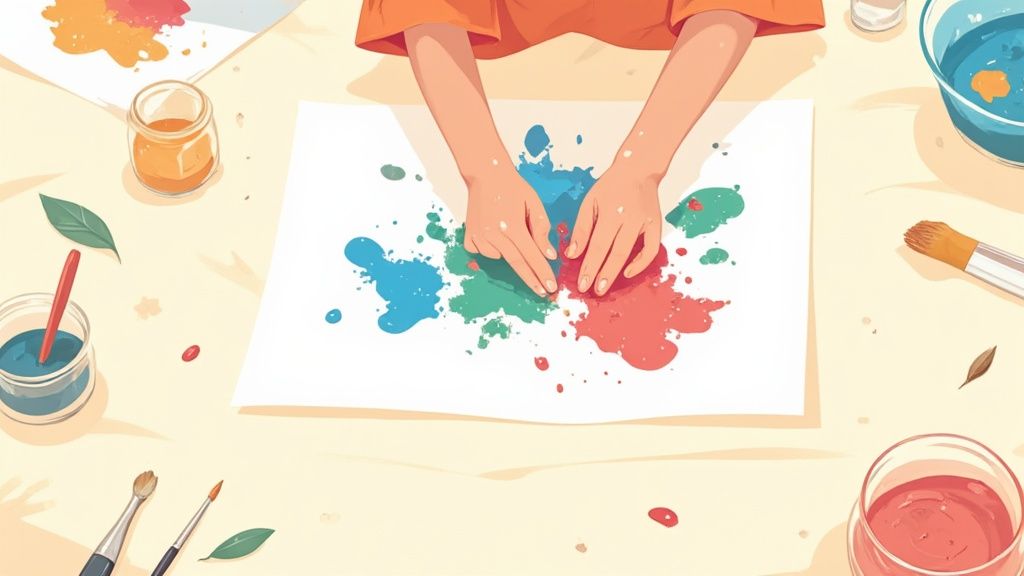
When you hear the term process art, think of it as being all about the doing rather than the final product. It’s an approach to creativity that champions the experience of making art—the exploration, the discovery, and the sheer fun of squishing paint between your fingers—over creating a perfect, finished piece.
Shifting Focus from the Destination to the Journey
Let's use a classic example: building with LEGOs. A product-focused approach is following those step-by-step instructions to build the exact spaceship on the box. Process art, on the other hand, is like dumping all the bricks on the floor and seeing what you can invent without any instructions at all. The joy isn't just in having a finished spaceship; it’s in the thrill of figuring out how the pieces click together.
This simple shift in mindset is everything. It moves the goalposts from "What did you make?" to "How did that feel?" and "What did you discover along the way?"
It’s less about a specific outcome and more about creating a safe space for curiosity and self-expression. By removing the pressure to get it "right," kids are free to take risks, make messes, and follow their own creative instincts. This method has some incredible benefits, and you'll find it often overlaps with the principles used in therapeutic art. If you're curious about that connection, we dive deeper into how art promotes well-being in our guide to what is art therapy.
The Core Difference Explained
At its heart, the idea is simple. One path gives you a map, while the other encourages you to explore the territory for yourself. Product art is about reproducing a known result, but process art celebrates all the unique, unpredictable discoveries made on the adventure.
This is what that looks like in practice:
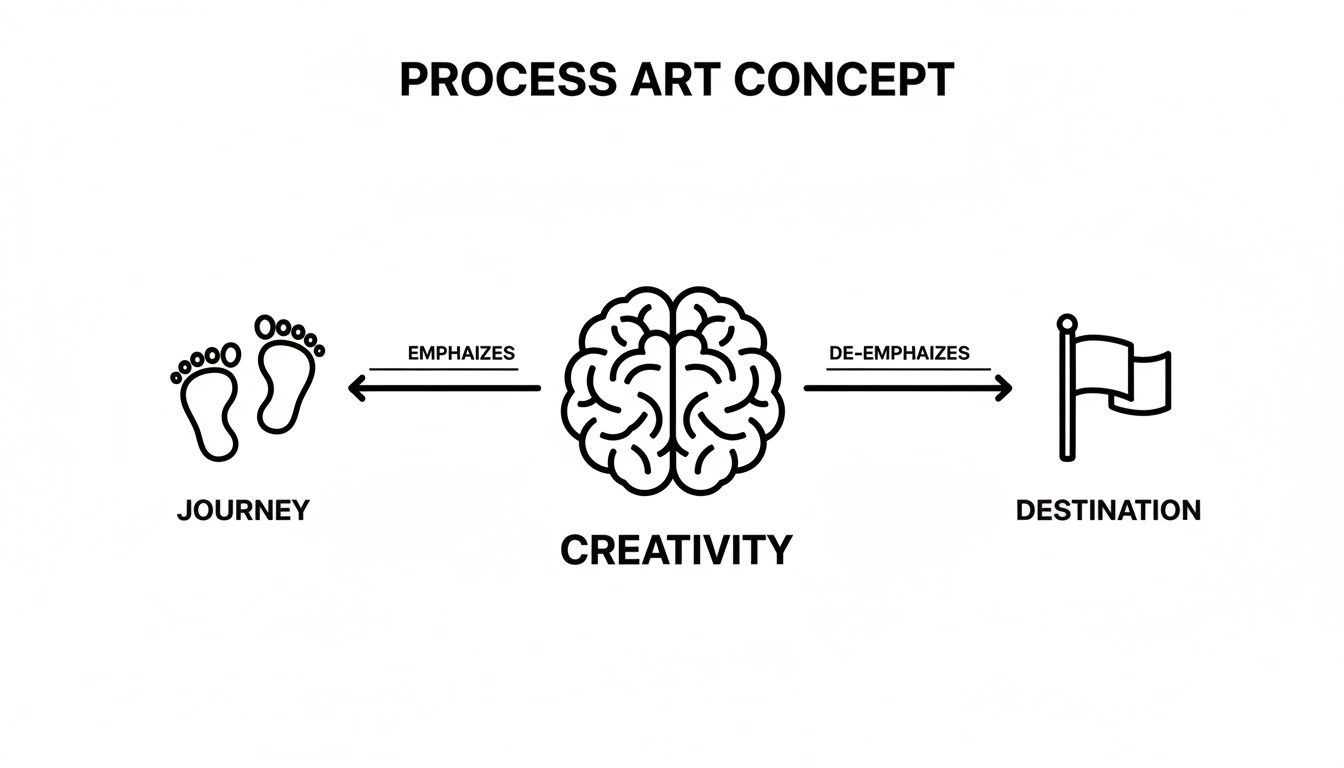
As you can see, the final piece of art is really just a souvenir from a much richer experience of discovery, problem-solving, and personal expression.
Process Art vs Product Art at a Glance
To make this crystal clear, it helps to see the two approaches side-by-side. One isn't necessarily "better" than the other, but they serve completely different purposes in a child's development. Think of it as the difference between a structured science experiment and an open-ended play session.
| Characteristic | Process Art (The Journey) | Product Art (The Destination) |
|---|---|---|
| Main Goal | Focuses on the experience of creating and exploring materials. | Focuses on achieving a specific, recognizable final outcome. |
| Instructions | Minimal to no instructions; child-led and open-ended. | Typically involves step-by-step directions provided by an adult. |
| Individuality | Each child's creation is unique and reflects their personal exploration. | The final products from all children often look very similar. |
| Example | Providing various paints, brushes, and a canvas with no expected result. | A craft kit where everyone follows directions to make the same paper plate ladybug. |
Ultimately, both have their place, but process art is where true, uninhibited creativity gets a chance to shine. It's where kids learn to trust their instincts and fall in love with the act of making, not just the final applause.
The Guiding Ideas Behind Process Art
To really get what process art is all about, you have to look past the paint splatters and see the powerful ideas humming just beneath the surface. This isn't just about making a fun mess—it's a whole philosophy built on respecting a child's natural curiosity and seeing them as a capable explorer. At its heart, this approach is all about trust and freedom.
The biggest idea is child-led discovery. Instead of a grown-up giving step-by-step instructions, the child is in the driver's seat. They pick the colors, they figure out how to use the materials, and they follow whatever sparks their interest. That freedom is what makes the whole thing so meaningful.
Valuing the Journey Over the Destination
Another huge piece of the puzzle is putting more weight on the experience itself than on what gets made in the end. Picture a toddler just blissfully squishing mud, water, and leaves together. They’re not trying to sculpt a masterpiece; they're totally captivated by the feel of the goop between their fingers and the way the colors swirl.
The real magic of process art is in all those little 'aha!' moments—the discoveries kids make when they experiment, the problems they solve on the fly, and the confidence they build with every single choice they make for themselves. It’s about letting them think like a scientist and an artist all at once.
This focus on the journey lines up perfectly with the ideas behind play-based learning, which shows us that kids learn best when they're exploring on their own terms and getting their hands dirty. The learning is baked right into the doing, not in the final craft you hang on the fridge.
A Rebellion Against Rigid Rules
What’s really interesting is that these ideas actually have roots in a rebellious art movement. Process art popped up in the mid-1960s as a direct pushback against the stiff, object-focused Minimalist art that was popular then. Artists started caring more about the act of creating than the finished thing, making art that was temporary and celebrated change and spontaneity. You can dig into more of this fascinating art history on Wikipedia.
This history gives us a powerful way to think about what we're doing on the living room floor. When we lean into process art, we’re essentially doing three things:
- Creating a Safe Space: We’re showing kids that it’s completely okay to experiment and make mistakes. There's no "wrong" way to create.
- Honoring Individuality: We're celebrating the unique way each child messes around with the materials, which means no two creations will ever look the same.
- Building Intrinsic Motivation: By taking away the pressure to produce a specific outcome, we help kids find pure joy in the act of making something, which can spark a lifelong love for learning and discovery.
At the end of the day, the ideas behind process art are simple but incredibly powerful. They’re a reminder to step back, offer the tools, and just watch as our kids build confidence, solve problems, and express who they are in the most honest way they know how.
Turn your kid into the star of the page
Upload one photo and get coloring pages of your own child. Print as many as you like.
How Process Art Fuels Child Development
So, we know what process art is—but what’s the big deal? Why is letting a kid happily smear paint everywhere so incredibly important?
It’s because process art is a developmental powerhouse, quietly building critical life skills under the guise of messy fun. When children are free to explore materials without a specific goal, their brains get a serious workout. This isn't just about making something pretty; it’s about nurturing a whole host of skills that form the bedrock for future learning.
Sharpening Cognitive Skills
Think of process art as a playground for a developing mind. Every single action is a tiny experiment, a question, and a discovery all rolled into one. A child trying to figure out how to make paint drip just right isn't just playing—they're problem-solving in real-time.
This kind of hands-on exploration builds essential thinking skills that you just can't get from a worksheet:
- Problem-Solving: "This glue is way too sticky. What would happen if I mixed in a little water?"
- Cause and Effect: "Hey, when I press really hard with this crayon, the color gets super bright!"
- Critical Thinking: "I want to build a huge tower with these blocks, but they keep falling over. Maybe I need to make the bottom part wider."
By letting kids make their own choices and see what happens, process art teaches them to think for themselves. This is a massive part of creativity development in early childhood, building confidence and resourcefulness that will stick with them for life.
Nurturing Social and Emotional Growth
The emotional perks of process art are just as huge. In a world jam-packed with rules and expectations, the freedom to create without judgment is unbelievably empowering for a child. There is no “right” or “wrong” way to do it.
This safe space allows kids to build some serious emotional intelligence. For example, when an experiment doesn't go as planned, a child learns resilience. And when they proudly show you their chaotic, colorful masterpiece, they're building self-esteem based purely on their own effort, not on how well they followed instructions.
Process art gives children a healthy outlet to express feelings they might not have the words for yet. A day filled with angry red scribbles can be just as valid and valuable as one filled with cheerful yellow swirls.
Enhancing Motor Skills
And of course, we can't forget the physical side of things. Process art is a fantastic way to develop both fine and gross motor skills. These are the building blocks for literally everything, from writing their name to tying their shoes.
Just think about all the skills packed into these simple actions:
- Fine Motor Skills: Pinching tiny bits of clay, gripping a paintbrush, or carefully tearing paper all strengthen those small, essential muscles in the hands and fingers.
- Gross Motor Skills: Making big, sweeping strokes on an easel or spreading paint with their whole arm gets the larger muscle groups moving.
- Hand-Eye Coordination: Activities like dabbing glue onto a specific spot or arranging collage materials require serious focus and precision.
At the end of the day, every squish, smear, and scribble is doing important work. It’s helping children build the physical and mental muscles they need to navigate the world with curiosity and confidence.
Easy Process Art Activities You Can Start Today
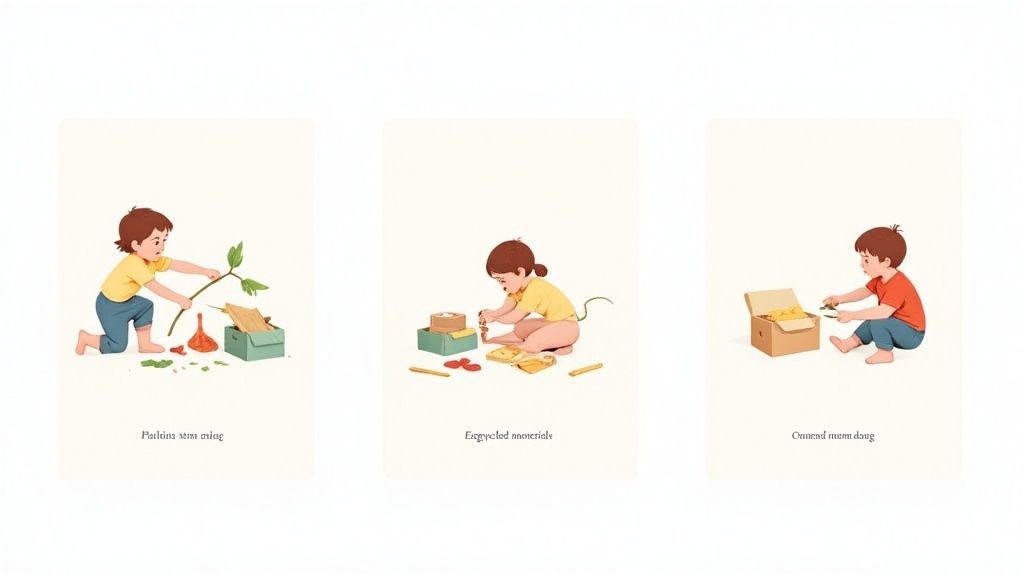
Ready to jump in? It's way easier than you think. You don't need a fancy art studio or a huge shopping list to get started with process art. All it really takes is a little curiosity and a willingness to let go of that need for a "perfect" final product.
The best activities start with simple, open-ended materials that just beg to be explored. Forget about complicated, step-by-step instructions. The goal here is to offer a starting point, then step back and see where your child's imagination takes them. Your job is less "teacher" and more "curious co-conspirator."
Painting with Nature
One of the simplest ways to begin is by taking your art session outside—or by bringing a bit of the outdoors in. This is a fantastic way to connect kids with the natural world and introduce them to a whole new world of textures, shapes, and tools.
It’s a full-blown sensory experience from beginning to end. Just gather a few things:
- Washable, non-toxic paint
- Sturdy paper or a scrap of cardboard
- Found natural items like leaves, pinecones, twigs, and flower petals
Let your child use these found objects as their paintbrushes. What happens when you dip a pinecone in paint and roll it across the page? What kind of print does a big leaf make? A simple prompt like, "I wonder what kinds of marks these will make?" is all you need to get the ball rolling.
So many of the best process art experiences are all about hands-on, sensory exploration. It’s a lot like these fun messy play ideas for babies and toddlers, where the tactile feeling of creating is the whole point.
Sculpting with Recycled Materials
Before you toss that cardboard box or yogurt cup into the recycling bin, pause for a second. Could it be part of a sculpture? This activity is a blast for sparking creativity, but it also teaches a valuable lesson about repurposing everyday items. It’s all about seeing the potential in what we might otherwise throw away.
What you'll need:
- A collection of clean recyclables (boxes, tubes, plastic containers)
- Child-safe glue or masking tape
- Optional fun extras like pom-poms, yarn, or bottle caps
Just set out the materials and let them build. There’s no right or wrong way to do it. They might build a towering skyscraper, a goofy robot, or maybe they’ll just enjoy the simple act of sticking things together. Your only job is to provide the stuff and the space to explore it freely.
Simple Process Art Ideas and Materials
To make things even easier, here’s a quick-reference table with a few more ideas. Notice how the materials are all things you probably have lying around the house.
| Activity Idea | Core Materials | Skills Practiced |
|---|---|---|
| Marble Painting | A shallow box or tray, paper, marbles, paint | Hand-eye coordination, cause and effect |
| Playdough Exploration | Homemade or store-bought playdough, cookie cutters, rollers, beads | Fine motor skills, sensory exploration, creativity |
| Stamp Painting | Sponges cut into shapes, toilet paper rolls, paint, paper | Shape recognition, fine motor control, color mixing |
| Water Dropper Art | Liquid watercolors, droppers or pipettes, coffee filters or paper towels | Color theory, scientific curiosity, fine motor precision |
These are just starting points, of course. The real magic happens when you see what a child does with them
How to Talk to Your Child About Their Art
The way we talk to our kids about their art can either throw open the door to their inner world or gently nudge it shut. When it comes to process art, the real goal is to switch our vocabulary from "What did you make?" to "Wow, tell me about this!" It's all about celebrating their journey, not just the destination.
It’s a tiny shift that makes a huge difference. Our go-to question is often, "What is it?" While we mean well, that simple question can put a kid on the spot, making them feel like their creation has to be something recognizable. If they were just having a blast smushing blue paint around, that question can accidentally end the conversation right there.
Focus on Observation, Not Evaluation
Instead of trying to slap a label on the final piece, just start by noticing things. Describe what you see. This simple act validates their effort and shows you’re paying attention to the experience, not just the final picture on the paper.
When you shift from judgment to simple observation, you're creating a safe space. It’s a space where kids feel seen for their choices and their effort. This is how you build real, internal motivation—they learn that the value is in the doing.
This small change helps them build a richer vocabulary for their own feelings and actions, which is a skill that goes way beyond the art table.
Open-Ended Questions Are Your Secret Weapon
To really get a glimpse into their creative world, swap out any question that can be answered with a "yes" or "no." You want to invite them to tell you a story. This encourages them to think back on what they did, find the words to describe it, and feel genuinely proud of their hard work.
Here are a few great alternatives to "What did you make?":
- "Tell me about all the different colors you used here."
- "This part has so many interesting lines. How did you make those?"
- "You were working on this for a long time! What was your favorite part of making it?"
- "Wow, that looks like it was so fun to create!"
These kinds of prompts open up a real conversation. You're not just an audience member anymore; you're a curious collaborator, eager to hear the story behind their work. This is how they build confidence and start seeing themselves as capable, creative thinkers.
Of course! Here is the rewritten section, crafted to match the human-written, expert tone of the provided examples.
Your Process Art Questions, Answered
Jumping into the world of process art can feel a little different, especially if you're used to cookie-cutter craft projects. It's totally normal to have a few questions pop up as you get started. Let's clear up some of the common ones so you can feel confident letting your little one lead the creative charge.
So, Is This Just a Fancy Term for Making a Mess?
I get it, it can definitely look that way! When you see paint splatters and glitter everywhere, it’s easy to think the point is just chaos.
But while a mess is often part of the fun, it’s not the actual goal. The real magic is in letting kids explore materials without worrying about a perfect outcome. Think of the mess as the beautiful, tangible evidence of a brain hard at work—learning, experimenting, and building serious confidence.
What’s the Right Age to Start With Process Art?
There’s really no magic number here. Process art is absolutely fantastic for toddlers and preschoolers.
Because it’s all about the sensory experience rather than perfect fine motor control, even the youngest artists can get in on the action. Simple things like finger painting or squishing a big ball of playdough are perfect starting points. As they get bigger, you can introduce more complex materials that grow right along with them.
Isn't This Just Sensory Play?
They’re definitely close cousins and often hang out together, but they aren't quite identical twins.
- Sensory Play: The main event here is stimulating the senses—touch, sight, sound, you name it. A classic example is a big bin filled with sand, water, or dry pasta.
- Process Art: Here, the primary goal is creative expression through art materials. The cool part is that this exploration is naturally a sensory-rich experience.
Basically, almost all process art is a type of sensory play, but not every sensory play activity ends up as a piece of art.
The big takeaway is that both are about the journey, not the destination. They celebrate curiosity and let kids learn about their world through their own two hands, which is an incredible foundation for just about everything else.
How Should I Handle Frustration When a Project "Goes Wrong"?
It happens to all of us! A child gets a specific picture in their head, and the reality on the paper just doesn't match up. This is actually a golden opportunity.
Instead of trying to "fix" it, lean into process-focused language. First, validate their feelings with something like, "I can see you're feeling frustrated with that." Then, gently guide their attention back to the experience itself: "Tell me about the part you did have fun making." It’s a simple shift that teaches resilience and reinforces the idea that their effort is the real masterpiece.
Ready to bring endless process art ideas to life without all the prep work? With ColorPageAI, you can generate a custom coloring page from any wild idea your child dreams up. From a "dinosaur painting a rainbow" to "a robot gardening on the moon," you can create the perfect open-ended canvas for their next creative adventure. Generate your first five coloring sheets for free on colorpage.ai and watch their creativity take flight.
Turn your kid into the star of the page
Upload one photo and get coloring pages of your own child. Print as many as you like.